Forget the Snowbird Routine
In the Midwest and Northeast, golf season runs May through September if you’re lucky. That means five months of play and seven months of withdrawal — or expensive winter trips to Arizona or Florida just to keep your swing alive.
Tennessee changes that equation completely.
East Tennessee’s climate supports golf 12 months a year. Not “technically playable if you wear four layers” golf. Actual, comfortable, enjoyable rounds through every season.
The Numbers Behind the Climate
Loudon County, where Tennessee National is located, averages 220+ days per year above 50 degrees Fahrenheit. That’s the threshold most golfers consider comfortable for a round.
Here’s what the seasons look like on the course:
Spring (March-May): Temperatures climb from the upper 50s into the mid-70s. Azaleas bloom along the fairways. The course is lush from spring rains. This is prime season — the kind of weather that makes you cancel afternoon meetings.
Summer (June-August): Warm, with highs in the mid-to-upper 80s. Morning tee times are ideal. The course at Tennessee National benefits from lake breezes off Watts Bar — a natural cooling effect that courses farther inland don’t get. Daylight stretches past 8:30 PM, so evening rounds are absolutely on the table.
Fall (September-November): This is East Tennessee’s secret weapon. Temperatures ease back into the 60s and 70s. Humidity drops. The surrounding mountains explode with color — reds, oranges, golds framing every hole. Many members say fall golf at Tennessee National is the best golf they’ve ever played, anywhere.
Winter (December-February): Highs typically range from the mid-40s to low 50s. Snow is rare in Loudon County — just 3-4 inches in an average year, and it melts fast. You’ll lose a few days to rain or cold snaps, but playable days outnumber unplayable ones by a wide margin. January golf is real here.
What Makes Tennessee National’s Course Special
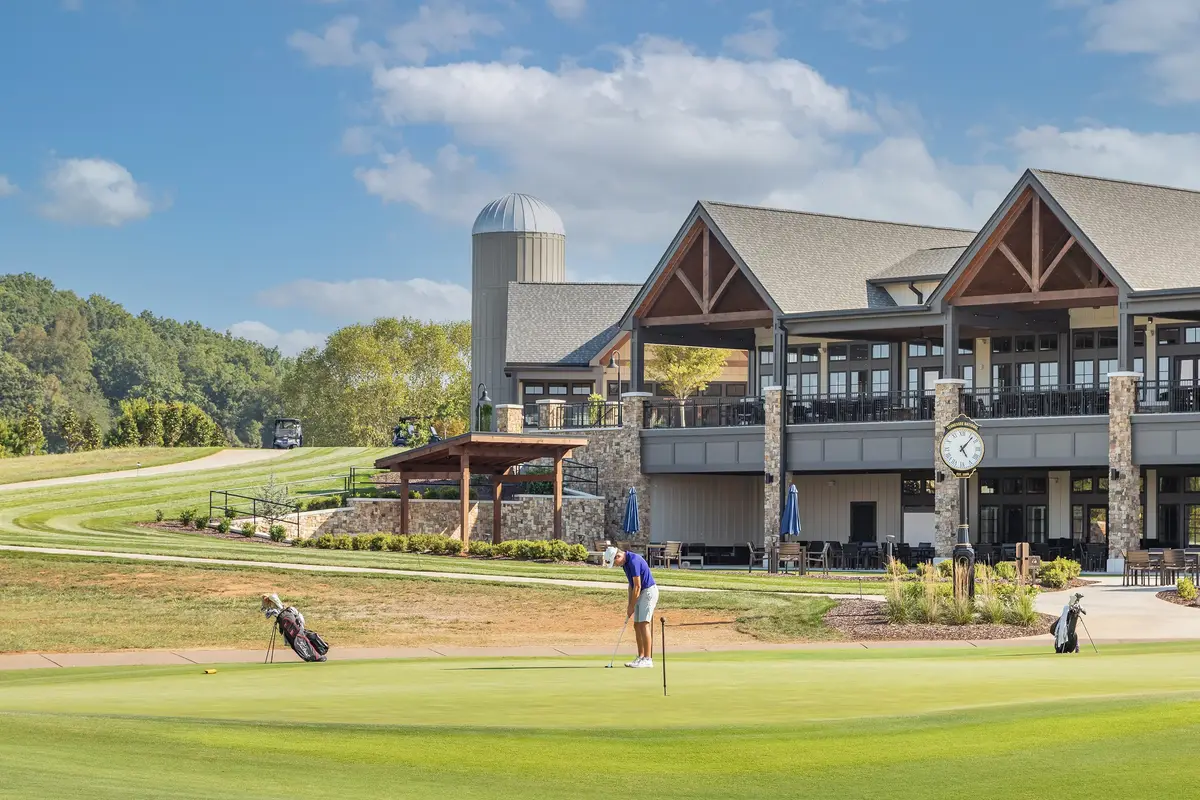
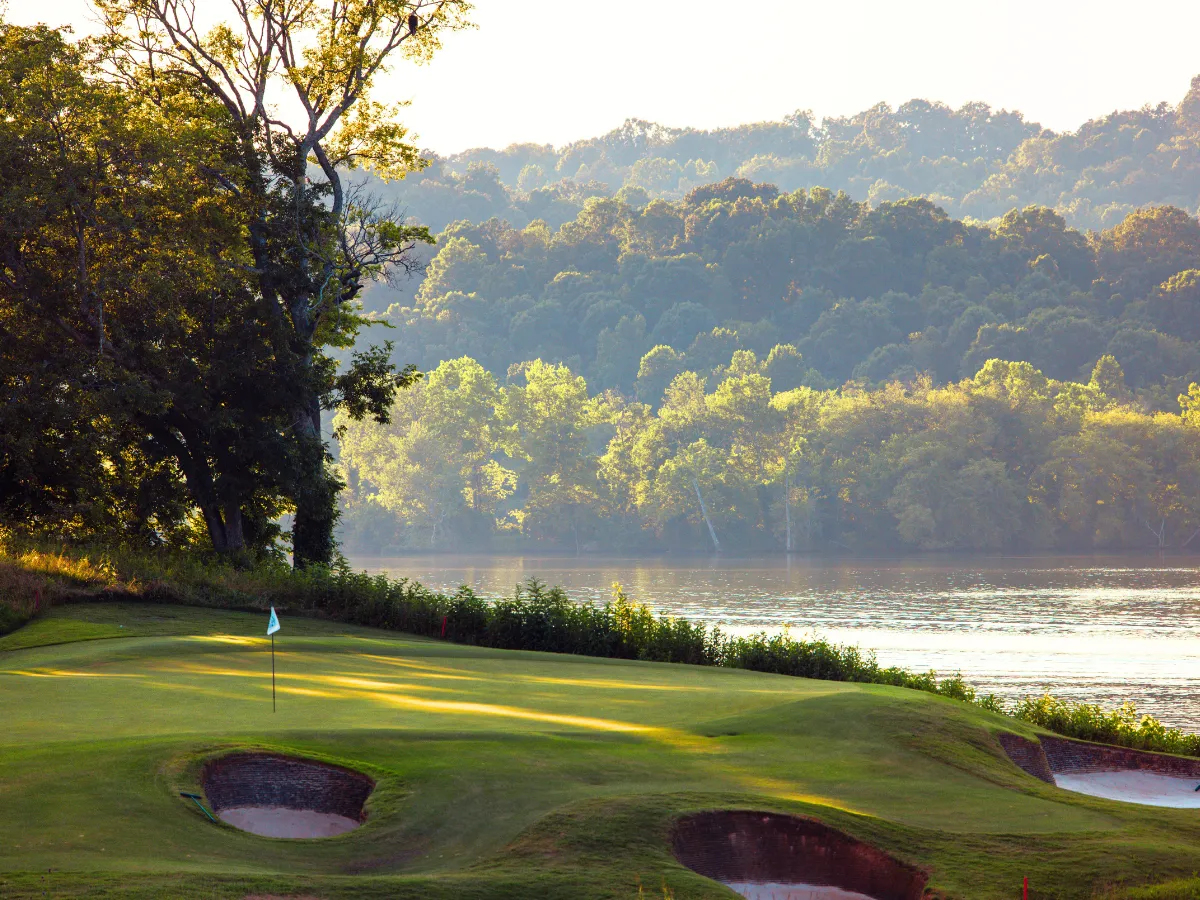
The championship 18-hole course at Tennessee National was designed to take advantage of the terrain. Rolling hills, elevation changes, and sight lines that frame Watts Bar Lake and the ridges beyond.
This isn’t a flat Florida course where every hole looks the same. Each hole has distinct character. Water features, strategic bunkering, and tree-lined fairways demand shot-making — but the course is designed to be enjoyable for a range of handicaps.
The lake and mountain views aren’t decoration. They’re the playing experience. Standing on an elevated tee box with the lake stretched out below and the Smoky Mountain foothills on the horizon — that’s not something you get tired of. It’s the reason people move here.
The Community Advantage
Golf is better with people you know. That’s the difference between a public course you drive to and a community course you walk to.
Tennessee National’s golf community is active year-round. Organized leagues, member tournaments, casual groups that play weekly — the social fabric around the course is as much a draw as the course itself.
New residents consistently say the golf community is where they built their first friendships after moving. A standing Wednesday game turns into dinner invitations, lake outings, and a genuine social life within weeks.
For retirees, this matters more than handicap index. Golf becomes the connective tissue of daily life — a reason to get up, get out, and stay engaged.
Comparing Tennessee to Other Golf Destinations
vs. Florida: Florida offers year-round golf too, but summer rounds are punishing. 95 degrees with tropical humidity makes afternoon play miserable from June through September. Florida courses also tend to be flat — fine, but repetitive. Tennessee gives you terrain, elevation, and four distinct seasons on the course.
vs. Arizona: Scottsdale and the Phoenix corridor are outstanding October through April. But summer golf in Arizona means 110-degree heat. The courses are expensive, water is scarce, and the landscape is brown desert. Tennessee stays green and temperate.
vs. Carolinas: The Carolinas are strong golf states. But coastal courses deal with hurricane season, and mountain courses in western North Carolina have shorter warm seasons than East Tennessee. Tennessee also wins on cost — both for real estate and membership.
vs. Midwest/Northeast: No contest. Tennessee adds 3-4 months of playable golf compared to states like Ohio, Michigan, Illinois, or New York. That’s roughly 50-80 additional rounds per year.
The Financial Case
Golf is an investment of time and money. If you’re paying for a membership or building a retirement around the game, you want maximum playing days per dollar.
Tennessee’s combination of no state income tax, reasonable property costs, and a 12-month golf climate means your golf dollar goes further here than almost anywhere in the country.
At Tennessee National, membership gives you access to a championship course, practice facilities, and a clubhouse — plus the lake, marina, and community amenities. The per-round cost drops fast when you’re playing year-round instead of five months a year.
The Bottom Line
If golf is part of your lifestyle — not just a hobby but a daily rhythm — location matters. You need a climate that cooperates, a course that inspires, and a community that shows up.
Tennessee National delivers all three, 12 months a year. Come play a round and see for yourself why members say the season never really ends here.